Harry Potter: Puzzles & Spells
- 4.7
- Rating
- 10.00M
- Installs
- Free
- Price

 Analysis by App-foxy
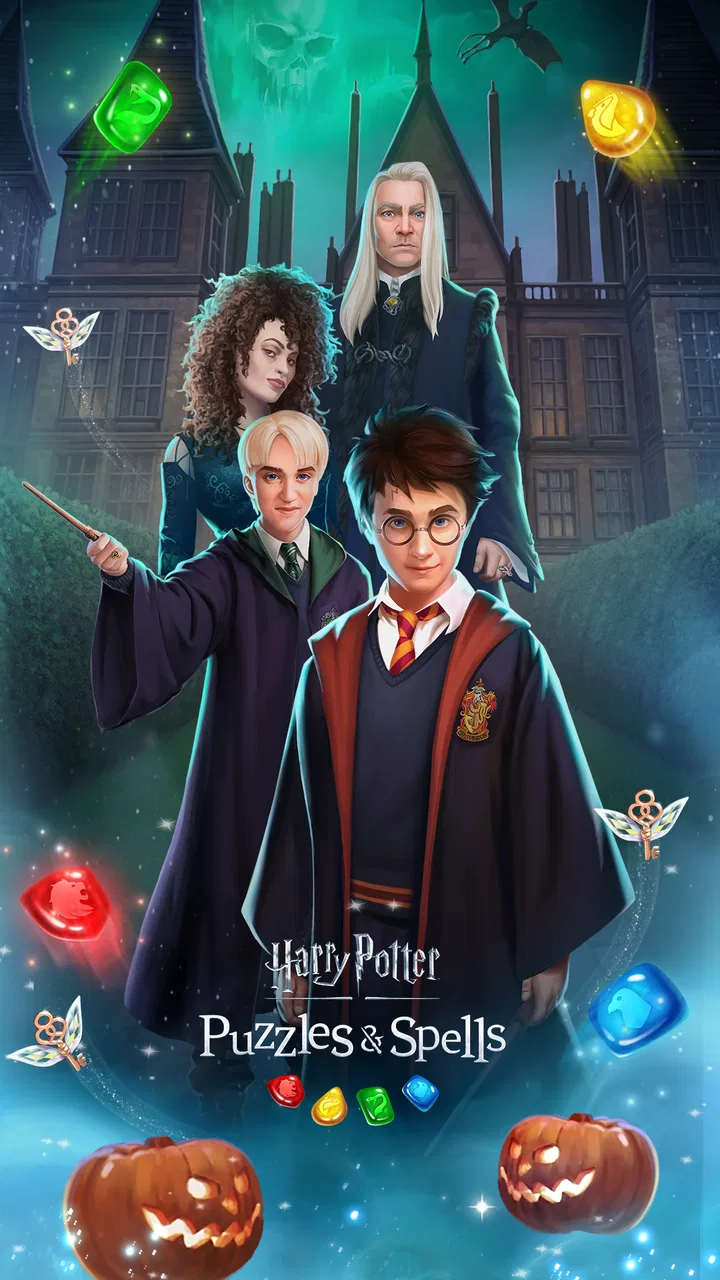
I spent time with Harry Potter: Puzzles & Spells as a casual mobile puzzle game, paying particular attention to how comfortably it works for different people and everyday situations. It is a free match-three game from Zynga, built around the Harry Potter and Hogwarts setting rather than around a complicated control scheme. That makes its basic idea easy to understand: arrange matching pieces, clear the board, and work through magical puzzle challenges.
My first impression was that it is most successful when I want a short, familiar-feeling puzzle session with a strong fantasy theme. The Harry Potter presentation gives the usual match-three format more personality, while the simple touch interaction keeps the barrier to entry low. At the same time, the game still uses the habits common to free-to-play mobile puzzles, so players who dislike interruptions, limited progression, or optional purchases should approach it with realistic expectations.
How clearly the game communicates what to do
The game’s biggest advantage for readability and navigation is its straightforward central action. Matching pieces on a grid is easier to understand than a game that asks the player to learn several gestures, virtual buttons, or layered menus at once. I found that useful when returning after a break: the basic puzzle language comes back quickly, even if I have not played for a while.
You May Also Like

 Blood Strike: 2.5 Anniversary
Blood Strike’s Loadouts Turn Every Drop Into a Tactical Gamble
A close look at Blood Strike’s custom loadouts: how fast access to signature weapons reshapes its battle royale rhythm, rewards preparation, and narrows the gap between fights.

 Pandora - Music & Podcasts
Pandora’s Music Is Easy to Start, but Harder to Recover
Pandora’s strength is its low-effort path from a seed to a station. Its weak spot is how much confidence it asks you to place in connection, setup, and quiet recovery.

 8 Ball Pool
 Is Built on Rivalries, Rematches, and Routine
A close look at the rivalries, rematches, shared routines, and unanswered safety questions that turn a quick pool match into a persistent mobile community.

 Samsung Music
’s Quiet Strength Is Playing What You Already Own
Its reach comes less from spectacle than from dependable access to a personal library. That simplicity is both the app’s strongest retention engine and its ceiling.

 AccuWeather: Weather Radar
AccuWeather Review: A Quick, Clear Forecast for Everyday Decisions
For everyday plans, the best forecast is the one you can understand quickly. AccuWeather makes rain timing, radar, and local conditions easy to act on, with a few trade-offs.

 Hill Climb Racing
Why Hill Climb Racing Still Turns Crashes Into One More Run
A tiny car, a bumpy hill and one more upgrade: Hill Climb Racing keeps resurfacing because its simple chaos makes every near-miss feel personal.
More From Our News Desk



The Hogwarts theme also gives the experience a clear identity. Characters, spells, and locations make the journey feel more directed than an entirely abstract puzzle board. For a Harry Potter fan, that context can make a familiar genre feel more inviting. For someone who does not care about the franchise, however, the decoration may not be enough to distinguish it from other match-three games for very long.
Navigation is best understood as a gradual learning process rather than a complex tutorial challenge. The early experience is approachable, but the more important skill is learning to pause and inspect the board before making a move. I recommend looking for larger combinations and possible chain reactions instead of immediately taking the first obvious match. That small habit makes the game feel less random and gives players more control over difficult boards.
One useful accessibility-minded detail is that match-three play does not require rapid reading while a move is being made. I can usually examine the board, decide what to do, and then touch the pieces. This is a better fit for players who need extra planning time than action games that punish a slow response. It also works well for someone playing while tired or distracted, provided the surrounding presentation is not too demanding in that moment.
Still, puzzle clarity depends on being able to distinguish the pieces and understand what has changed after a match. Visual effects can make successful moves feel satisfying, but a busy board may be harder to interpret for players with reduced vision, color-vision differences, or sensitivity to movement. I would not assume that every symbol, color, and effect is equally easy for every player. Anyone who relies on strong contrast, large text, or reduced animation should test the first sessions carefully rather than deciding from the theme alone.
Why the familiar format helps new players
The game is a reasonable starting point for someone who has not played many mobile puzzles. It does not ask the player to memorize a long list of controls, and the touch input is more natural than a virtual joystick. A relative who enjoys Harry Potter but rarely plays games could understand the main action quickly, especially if another person explains the first few turns.
That simplicity should not be confused with unlimited ease. Match-three games often begin gently and then expect more deliberate choices. My practical advice is to treat the board as a small planning exercise, not as a speed test. Scan from the bottom upward, check whether a move opens another match, and avoid spending a valuable special opportunity just to clear an ordinary pair. These habits matter more than tapping quickly.
The age rating is Everyone, which makes the game broadly approachable from a content perspective. That does not mean every child will find the experience equally comfortable or that every family will want in-app purchases enabled. Adults should still decide how the game fits their household rules, particularly if a shared device stores payment details.
Touch, vision, hearing, and the situations where it works best
From a motor perspective, the game is less demanding than most action-oriented mobile titles. Its core interaction is based on touching and moving pieces, rather than steering a character through a fast environment or pressing several controls at once. That makes it a better candidate for players who prefer deliberate gestures. It may also suit someone using one hand during a short break, although comfort will depend on the device and how precisely the player can touch the board.
There is still a physical requirement that should not be overlooked. A player needs to make accurate selections and, when necessary, move a piece in the intended direction. If someone has limited fine-motor control, tremors, or difficulty maintaining a steady touch, mistakes may happen even though the game looks simple. The lack of complex controls reduces one barrier but does not remove the need for reliable screen interaction.
I also see a trade-off between relaxed pacing and visual stimulation. The game’s magical presentation is part of its appeal, but effects, movement, and changing board states may be tiring for people who are sensitive to animation. A quiet puzzle board with minimal decoration may be a better choice for those players. Here, the Harry Potter atmosphere is both the reason to choose this game and a possible reason to skip it.
Hearing is less central to the basic puzzle task than vision and touch. A player can understand the main objective from the board itself, so the game is not dependent on following spoken instructions to make a move. That is helpful in shared spaces or for people who prefer to play without sound. I still recommend checking the first session with audio muted if the surrounding effects become distracting; the puzzle should remain understandable through its visual feedback.
For players with cognitive fatigue, the short-session nature can be useful. I can open a puzzle, make a few decisions, and stop without needing to remember a complex control layout. The more difficult issue is mental clutter: a board with several possible matches demands attention, and progression systems can encourage the player to keep going after the enjoyable part of a session has ended. Setting a personal stopping point is a simple way to keep the game relaxing.
A realistic everyday test
Imagine waiting for an appointment with a phone in one hand and only a few quiet minutes available. This is the kind of situation where I find the game most natural. I can play without preparing a large virtual world, and the match-three structure gives me an obvious point at which to pause. It is also suitable for a calm evening when I want something more interactive than watching a video but less demanding than a competitive game.
The same scenario reveals an important limitation. If the player is on a crowded bus, walking between places, or dealing with frequent interruptions, a careful puzzle can become frustrating. A missed touch or a forgotten board plan may lead to a poor move. For those moments, an offline-style puzzle with no progression pressure may be a better fit, depending on personal preferences and the specific game being compared.
It is also worth considering the phone itself. Small screens can make individual pieces harder to inspect, while a larger display may make the board more comfortable for players who need room for accurate touches. I would not choose a device solely for this game, but screen size can noticeably affect accessibility. Keeping the display clean and using comfortable brightness can help more than trying to play through glare or low visibility.
Where this game compares well with other puzzle choices
Compared with a plain match-three game, this title offers a stronger sense of place and a recognizable cast of magical ideas. That can provide motivation when the matching mechanics alone would feel repetitive. Themed progression is especially useful for fans who enjoy seeing a familiar fictional world attached to ordinary puzzle objectives.
Compared with a minimalist puzzle game, though, it may feel busier and less focused. A minimalist alternative is often preferable for someone who wants clean visuals, fewer distractions, or a purely logical challenge. Compared with a word puzzle, this game also asks less from language skills, which can help players who are not confident readers or who simply want to avoid vocabulary-based play. In contrast, a word game may be more suitable for someone seeking a quieter, text-centered activity.
It also differs from fast arcade games in a positive way for many players: success is based more on observation than reflex. That makes it a better choice for a relaxed pace. But if you want deep strategic planning, long-form problem solving, or a puzzle system that never leans on chance, a dedicated logic game may offer more substance than this match-three format.
Remaining barriers and the free-to-play trade-off
The most important friction is not the basic control scheme; it is the structure surrounding the puzzles. The game is free to download and play, but it includes optional purchases ranging from under a dollar to well over a hundred dollars for an individual item. That range matters because a free entry point can feel very different from a completely cost-free experience. I would recommend checking purchase controls before handing the phone to a child or anyone who may tap through prompts quickly.
These purchases can also affect how different players experience progress. Someone who is comfortable waiting, replaying, or accepting occasional failure may enjoy the game without spending. Someone who wants uninterrupted advancement may feel more pressure to pay. That is not a reason for everyone to avoid it, but it is a genuine accessibility issue in the wider sense: time, patience, and budget all influence how comfortable the experience becomes.
Another barrier is repetition. The match-three foundation is easy to pick up, but its appeal depends on enjoying repeated variations of the same basic action. Harry Potter presentation adds flavor, yet it cannot completely change the underlying rhythm. Players who need constant novelty may lose interest, while fans who enjoy familiar characters and gradual progress may find the repetition reassuring.
Visual accessibility remains a personal question. I would pay attention to whether pieces remain distinguishable when the screen is dim, whether effects make it difficult to follow the board, and whether text is comfortable to read without leaning closer. If those checks fail, choosing a game with explicit display options or a simpler visual design would be wiser. I would not select this title as the safest option for someone whose play depends on large, high-contrast elements unless they have already tested it on their device.
There is also a social and environmental consideration. The game’s theme can make it enjoyable in a family setting, but a shared screen may not be ideal if several people want to make moves at once. It is better suited to one player taking turns at their own pace. For a group activity, a board game or cooperative title with clearer shared participation may work better.
The technical baseline is fairly broad: the current version is 106.0.338, and it runs on Android 7.0 or later. That makes it available to people using older compatible Android devices, although actual comfort will still depend on screen quality, performance, and available space. I would check the operating-system requirement before planning to install it on an older phone, then consider whether the device remains pleasant to use rather than merely able to launch the game.
Who I would recommend it to
I would recommend it first to Harry Potter fans who want a familiar mobile puzzle they can play in short bursts. It is also a good match for people who prefer touch controls, visual goals, and a slower pace than action games. The broad audience is reflected in its popularity: it has passed ten million installs, with a 4.7 average from roughly 907 thousand ratings. Those figures suggest that the basic combination of theme and match-three play has reached a substantial audience, though popularity does not remove the personal trade-offs.
I would be more cautious about recommending it to players who dislike in-app purchase prompts, want a completely distraction-free interface, or need highly adjustable visual presentation. It is also not my first choice for someone seeking a serious logic challenge, a competitive experience, or a game designed around accessibility controls. In those cases, a specialized puzzle alternative may be more appropriate even if it lacks the Hogwarts setting.
For families, I would frame it as a game to try together before deciding whether it belongs on a child’s regular device. The Everyone rating is reassuring about the intended audience, but the free-to-play purchase range makes supervision sensible. I would also watch how the player responds to repeated failures and progression pressure. A game can be content-appropriate while still not being the right emotional fit for every child.
My inclusive verdict after playing
Harry Potter: Puzzles & Spells works best as a recognizable, low-control match-three game with a magical wrapper. I like that it does not demand quick reflexes or a large control vocabulary, and I can imagine recommending it for quiet waiting periods, relaxed evenings, and players who enjoy planning one move at a time. The setting gives the format a reason to return, particularly for fans of Hogwarts.
Its inclusive strengths are real but limited. Deliberate touch play and a familiar objective help many people get started, while the game’s broad age rating keeps the content approachable. However, visual effects, precise touch requirements, repetition, and purchase-driven progression can create barriers for players with particular sensory, motor, financial, or attention needs.
My final advice is simple: choose it for the theme and the convenience of casual match-three play, not because it promises a universally comfortable experience. Try a few sessions on the intended device, notice how easily the board can be read, and decide in advance how you will handle purchases and play time. With those expectations in place, it is an enjoyable free puzzle for the right audience, but players who need maximum control over presentation or progression should look elsewhere.
Developed by Zynga and released on September 22, 2020, the game remains an easy recommendation for fans who want Harry Potter flavor in a familiar puzzle format. I would describe it as accessible at the level of its basic idea, yet only conditionally inclusive in the details. Its strongest quality is the low-pressure touch interaction; its biggest weakness is the friction surrounding a free-to-play design.
FAQs for Harry Potter: Puzzles & Spells
01What is the main objective of Harry Potter: Puzzles & Spells?
Harry Potter: Puzzles & Spells is a match-3 puzzle game where players solve puzzles to progress through various levels inspired by the Harry Potter series. The main objective is to complete these puzzles by matching three or more objects, using spells and abilities to overcome challenges and unlock magical creatures and locations.
02Do I need an internet connection to play Harry Potter: Puzzles & Spells?
Yes, an internet connection is required to play Harry Potter: Puzzles & Spells. The game features online events, leaderboards, and social interactions, which necessitate being connected to the internet to fully experience all the available features and compete with other players globally.
03Are there any in-app purchases in Harry Potter: Puzzles & Spells?
Harry Potter: Puzzles & Spells offers in-app purchases that allow players to buy gold, lives, and boosters. While the game is free to download and play, these purchases can enhance the gaming experience by providing advantages or enabling quicker progression through the more challenging levels.
04Can I play Harry Potter: Puzzles & Spells with friends?
Yes, you can play with friends in Harry Potter: Puzzles & Spells. The game includes social features that let you connect with friends, join clubs, and participate in cooperative events. This social aspect allows collaboration and competition, enhancing the overall enjoyment of the game.
05What are the device requirements for Harry Potter: Puzzles & Spells?
Harry Potter: Puzzles & Spells is available on both Android and iOS platforms. For optimal performance, ensure your device has the latest OS updates and sufficient storage space. Specific device requirements may vary, so it's recommended to check the app store listing for detailed compatibility information before downloading.
Pros
- Immersive storylines from the Harry Potter universe.
- Charming graphics and spell effects.
- Engaging
- progressively challenging puzzles.
- Frequent updates and new events.
- Connect with friends for extra rewards.
Cons
- Requires constant internet connection.
- In-app purchases can be pricey.
- Energy system limits play time.
- Occasional ads can disrupt gameplay.
- May not appeal to non-Harry Potter fans.

Harry Potter: Puzzles & Spells
Gallery